
Evaluating AI creative tools has become one of the most consequential decisions a marketing leader makes today. The market is flooded with products claiming to transform your marketing with artificial intelligence — from point tools that generate copy to full platforms that promise end-to-end campaign execution. The problem is not a lack of options. It is knowing which options actually deliver and which ones create more work than they eliminate. This guide gives you a structured framework for cutting through the noise.
If you are a VP of Marketing, a Director of Demand Gen, or a Head of Marketing Ops, you have probably been pitched at least a dozen AI tools in the past quarter. Each one sounds promising in the demo. The question is which ones hold up when you move from demo to daily use.
Understanding the Landscape: Point Tools, Platforms, and AI Agencies
Before you evaluate individual solutions, understand the three broad categories you are choosing between.
Point tools solve one specific problem — generating ad copy, creating images, writing email subject lines, or optimizing send times. They are quick to adopt, low cost, and narrow in scope. You will likely use several of them, and the integration burden falls on your team.
Platforms attempt to cover the full campaign lifecycle — from content creation through deployment and optimization. They are more complex to implement but promise to reduce tool sprawl and streamline workflows. The tradeoff is a longer onboarding period and a bigger bet on a single vendor.
AI agencies combine artificial intelligence with human oversight to deliver campaign execution as a service. Instead of handing you a tool, they hand you finished campaigns. The value proposition is speed and quality; the concern is dependency and control.
Each model has legitimate strengths. The right choice depends on your team's size, technical maturity, and how much of the execution work you want to keep in-house versus outsource. For a detailed look at how one platform approaches this, visit Why CharacterQuilt.
The Five Evaluation Criteria That Actually Matter
After working with marketing teams across San Francisco and globally, we have identified five criteria that separate tools that deliver real value from tools that look good in a demo and gather dust within two months.
1. Deployment Capability
This is the single most important criterion and the one most buyers overlook. Ask: does this tool actually deploy campaigns into your marketing stack, or does it generate assets that you then manually import?
A tool that generates a great email but requires you to copy-paste it into HubSpot, manually set up the workflow, and hand-build the landing page has not saved you much time. The real value is in tools that connect to your systems and do the building for you — creating emails inside your MAP, configuring workflows, publishing landing pages, and setting up ad campaigns in your ad platforms.
If the vendor cannot demonstrate live deployment into a marketing automation platform during the evaluation, that is a significant gap.
2. Brand Governance
AI-generated content that does not match your brand voice, visual identity, and messaging guidelines creates more work, not less. You end up editing every output to fix tone, swap out off-brand imagery, and align with your positioning.
Evaluate how the tool learns and enforces your brand standards. Can you upload brand guidelines, tone of voice documents, and approved visual assets? Does the system reference those guidelines consistently across outputs? Can you set guardrails that prevent certain language, claims, or imagery from appearing?
Brand governance is not a nice-to-have feature. It is the difference between an AI tool your team trusts and one your team spends hours babysitting.
3. Integration Depth
Surface-level integrations that sync contact lists or push data between tools are baseline expectations. What you need to evaluate is operational integration — can the tool actually operate inside your existing platforms?
Ask about specific integrations with your marketing automation platform, CRM, CMS, ad platforms, and design tools. Ask whether the integration is read-only or read-write. Ask whether the tool can create, modify, and publish assets inside those platforms, not just pull data from them.
The depth of an AI tool's integrations determines whether it is a productivity enhancement or a productivity illusion. If you still have to do the last mile of execution manually, the time savings evaporate.
4. Learning and Feedback Loop
The best AI tools get better over time because they learn from your feedback, your performance data, and your preferences. The worst ones produce the same generic output on day one hundred as they did on day one.
Ask how the system incorporates feedback. When you edit an output, does the system learn from that edit? When a campaign performs well or poorly, does the system adjust its approach? Is there a mechanism for your team to teach the system your preferences explicitly?
A tool with a strong feedback loop becomes more valuable the longer you use it. A tool without one is a commodity that any competitor can replicate.
5. Cost Structure
AI tool pricing varies wildly — per seat, per output, per campaign, per token, or flat monthly fees. The pricing model matters as much as the price itself because it determines how your costs scale as usage increases.
Per-output pricing can become expensive quickly as you scale campaign volume. Per-seat pricing penalizes larger teams. Flat-fee models provide predictability but may limit usage. Understand not just what you will pay today, but what you will pay when you are running three times as many campaigns.
For a transparent look at how campaign-based pricing works, visit our Pricing page.
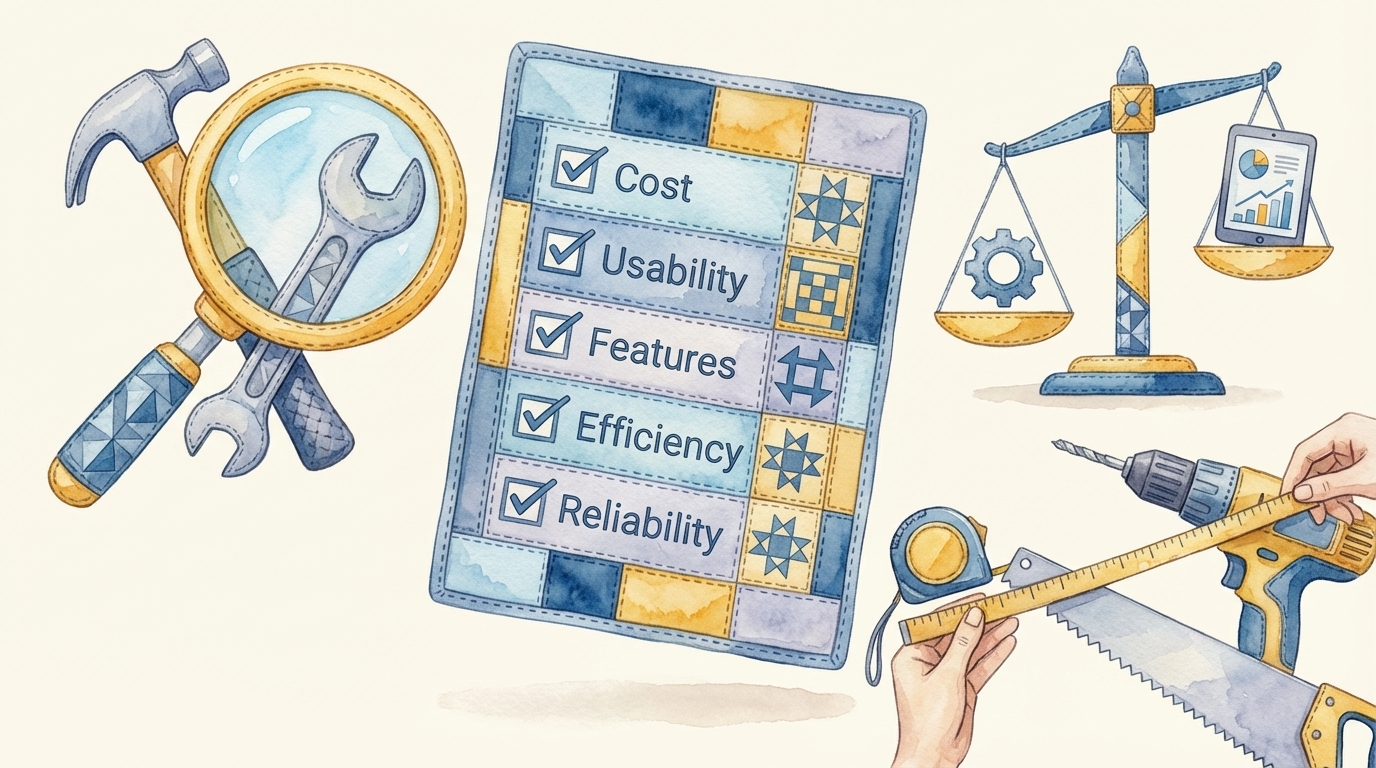
Evaluation checklist: Before committing to any AI creative tool, confirm it can (1) deploy directly into your stack, (2) enforce your brand guidelines, (3) integrate deeply with your core platforms, (4) learn from your feedback over time, and (5) scale affordably as your campaign volume grows.
Red Flags to Watch For
Certain patterns should immediately raise concerns during your evaluation process.
No live deployment: If the tool generates assets but cannot deploy them into your marketing stack, you are buying a content generator with extra steps. The execution bottleneck — the part that actually takes the most time — remains unsolved.
No brand controls: If the tool cannot be configured with your brand guidelines, you will spend significant time editing every output. This is especially dangerous for teams that need to maintain consistent positioning across dozens of campaigns.
Manual export required: If the workflow involves generating content in the AI tool, exporting it, and then importing it into your marketing platform, you have added a tool to your stack without removing any work. The net impact on execution speed is minimal.
Vague integration claims: "Integrates with HubSpot" can mean anything from "we sync contact data" to "we build complete campaigns inside your portal." Push for specificity. Ask for a live demonstration of the integration doing real work inside your platform instance.
No performance feedback mechanism: If the tool has no way to learn from campaign results or your editorial corrections, its output quality is static. You are renting a tool that never improves.
Questions to Ask Every Vendor
Use these questions during your evaluation calls to quickly assess whether a tool meets the criteria that matter.
- Can you deploy a complete campaign — email, workflow, landing page — inside our HubSpot/Marketo instance during this demo?
- How do you ingest and enforce our brand guidelines, tone of voice, and visual standards?
- When I edit an output, does the system learn from that correction for future outputs?
- What happens to my cost if I triple my campaign volume next quarter?
- Can you show me the naming conventions and folder structure your tool uses when building inside our MAP?
- How do you handle multi-channel campaigns that span email, landing pages, and paid ads?
- What does your onboarding process look like, and how long until we are running campaigns independently?
These questions cut through marketing language and force vendors to demonstrate real capability. Any vendor worth evaluating should be able to answer every one of them with specifics, not generalities.
Make the Decision That Matches Your Team
The right AI creative tool depends on where your team is today and where you want to be in twelve months. If you have strong ops capacity and need help with content volume, a point tool may suffice. If your bottleneck is end-to-end campaign execution and you want to dramatically increase throughput, you need a platform or service that deploys directly into your stack.
Whatever you choose, apply the five criteria rigorously. Deployment capability, brand governance, integration depth, feedback loops, and cost structure are the variables that determine whether an AI tool becomes a core part of your marketing operation or an expensive experiment that gets abandoned in a quarter.
Ready to see how a deployment-first AI platform compares to the tools you are evaluating? Book a demo and let CharacterQuilt show you what end-to-end campaign deployment looks like — built directly inside your marketing stack.